
Compound Interest Calculator Malaysia: Plan Your Savings and Investments
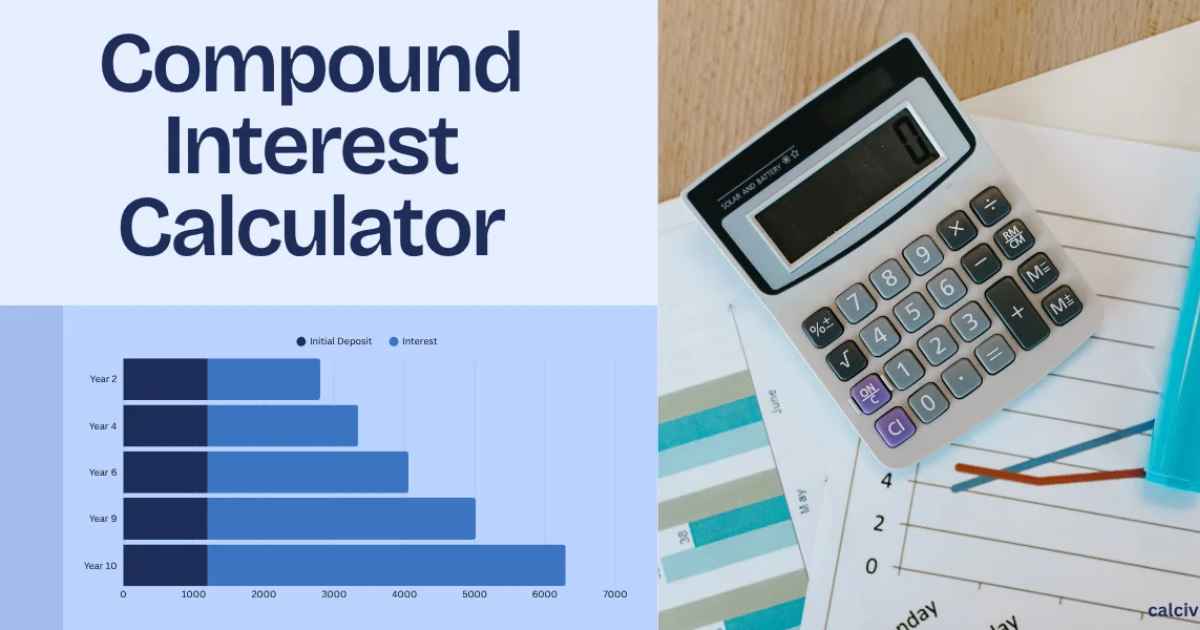
Building wealth is often less about making one large investment and more about allowing your money to grow consistently over time. One of the most useful concepts for understanding long-term growth is compound interest.
A compound interest calculator in Malaysia can help savers and investors estimate how their money may grow when returns are reinvested. By entering an initial amount, expected return, investment period, and additional contributions, you can create different scenarios and see how time and consistency can affect potential results.
This guide explains how compound interest works, how to use a calculator, and how Malaysian savers can apply the concept to their financial planning.
What Is Compound Interest?
Compound interest means earning returns on both your original money and previously accumulated returns.
With simple interest, returns are calculated primarily on the original principal.
With compound growth, accumulated returns can themselves generate additional returns.
For example, suppose you invest RM10,000 and earn a hypothetical 5% annual return.
After one year:
RM10,000 × 5% = RM500
Your balance becomes:
RM10,500
If the return is compounded annually, the following year’s 5% is calculated on RM10,500 rather than the original RM10,000.
This creates a compounding effect over time.
The Compound Interest Formula
The basic compound interest formula is:
A = P(1 + r/n)^(nt)
Where:
- A = Future value
- P = Initial principal
- r = Annual interest or return rate expressed as a decimal
- n = Number of compounding periods per year
- t = Number of years
For example, an annual rate of 5% is written as 0.05 in the formula.
A compound interest calculator performs these calculations automatically, making it easier to compare different scenarios.
Why Use a Compound Interest Calculator in Malaysia?
A calculator can be useful for several financial-planning situations.
Estimate Future Savings
You can estimate how much your savings could potentially grow over a specific period.
Compare Different Return Rates
You can compare hypothetical annual returns, such as 3%, 5%, or 7%.
Understand the Effect of Time
A calculator can demonstrate how leaving money invested for longer periods can potentially increase its future value.
Plan Regular Contributions
Many calculators allow you to include monthly or annual contributions.
Set Savings Goals
You can work backward from a target amount to estimate how much you may need to save regularly.
A Simple Example
Suppose you start with:
- Initial investment: RM10,000
- Annual return: 5%
- Compounding: annually
- Period: 10 years
- Additional contributions: RM0
Using the compound interest formula:
A = RM10,000 × (1.05)^10
The estimated future value would be approximately RM16,289.
This example demonstrates the effect of compounding, but it should not be interpreted as a guaranteed investment return.
The Importance of Time
Time is one of the most important factors in compound growth.
Consider two investors who receive the same hypothetical annual return. The investor who starts earlier has more time for accumulated returns to generate additional returns.
This is sometimes described as “earning returns on returns.”
The longer the investment period, the more significant the compounding effect can become.
However, real investment returns are not guaranteed and can fluctuate.
Monthly Contributions and Compound Growth
A compound interest calculator becomes even more useful when you include regular contributions.
For example, suppose you start with RM5,000 and add RM500 every month.
Your growth can come from two sources:
- Your own contributions
- Returns generated by the money already invested
Over a long period, the second component can become increasingly important.
This is why consistent saving and investing can be powerful when combined with sufficient time.
Example With Monthly Savings
Imagine a hypothetical scenario:
- Initial amount: RM5,000
- Monthly contribution: RM500
- Expected annual return: 5%
- Investment period: 10 years
You would contribute:
RM500 × 12 × 10 = RM60,000
Together with the initial RM5,000, your total contributions would be RM65,000.
If the hypothetical 5% annual return were compounded monthly, the final value could be higher than the amount you personally contributed.
The difference would represent investment growth, although actual market returns will vary.
Compound Interest vs Simple Interest
Understanding the difference is important.
Simple Interest
Simple interest generally calculates returns based on the original principal.
For example:
RM10,000 × 5% = RM500 per year
Compound Interest
Compound growth allows accumulated returns to generate additional returns.
The difference may seem small during the early years but can become much more significant over longer periods.
Compound Interest and Fixed Deposits in Malaysia
Fixed deposits can provide interest that may be compounded or paid according to the specific product terms.
However, not every FD works exactly like a continuously compounding investment.
Some fixed deposits pay interest at maturity or according to a defined schedule.
If you plan to reinvest the interest after maturity, the new deposit rate may differ from the original rate.
Therefore, when using a compound interest calculator for an FD, make sure the calculation matches the bank’s actual product structure.
Compound Growth and Investments
Compound growth can also be used to illustrate the potential long-term effect of reinvesting investment income.
For example, an investor may receive dividends from an equity investment and choose to reinvest them.
Over time, the reinvested dividends can purchase additional assets, potentially creating additional future income.
However, investments such as stocks and ETFs do not provide guaranteed returns.
A calculator using a constant annual return is therefore a projection, not a prediction.
What Inputs Should You Enter?
When using a compound interest calculator in Malaysia, you will typically need:
Initial Investment
The amount you start with.
Interest or Expected Return
The annual rate used for the calculation.
Compounding Frequency
This may be:
- Annually
- Semi-annually
- Quarterly
- Monthly
Investment Period
The number of years you plan to save or invest.
Regular Contribution
Some calculators allow you to enter a monthly or annual contribution.
Contribution Timing
For more detailed calculations, the timing of contributions can also matter.
How Inflation Affects Compound Growth
A calculator usually shows nominal growth unless it specifically accounts for inflation.
Suppose your savings grow by 5% per year while inflation averages 3%.
Your money may grow in numerical terms, but its purchasing power will increase more slowly.
For long-term financial planning, considering inflation can therefore provide a more realistic picture.
Compound Interest and the Rule of 72
The Rule of 72 is a simple estimation technique sometimes used to understand how long it may take for money to double.
You divide 72 by the assumed annual return.
For example:
72 ÷ 6 = 12 years
At a hypothetical 6% annual return, money could take roughly 12 years to double under simplified assumptions.
This is only an approximation and does not account for taxes, fees, changing returns, or other factors.
How to Use a Compound Interest Calculator for Financial Planning
A useful approach is to create several scenarios.
Conservative Scenario
Use a lower assumed return.
Moderate Scenario
Use a middle-range assumption.
Higher-Growth Scenario
Use a higher hypothetical return while recognising that higher potential returns generally involve greater risk.
Comparing multiple scenarios can help prevent you from relying on one unrealistic assumption.
Common Mistakes to Avoid
Using Unrealistically High Returns
A calculator can produce impressive results when you enter a very high rate, but that does not mean the return is achievable.
Ignoring Fees
Investment fees can reduce long-term returns.
Forgetting Inflation
Nominal growth does not necessarily represent increased purchasing power.
Assuming Returns Are Guaranteed
Market investments fluctuate.
Ignoring Taxes
Depending on the investment and circumstances, taxes can affect actual returns.
Stopping Contributions Too Early
Regular contributions can make a significant difference over long periods.
How Malaysians Can Use Compound Growth in Their Financial Plans
Compound interest calculations can be useful when planning for goals such as:
- Retirement
- Children’s education
- Home-related savings
- Long-term wealth building
- Emergency reserves
- Other future financial goals
For each goal, estimate:
Target amount + timeframe + starting savings + regular contribution
Then use different return assumptions to understand what may be required.
Compound Interest vs Fixed Deposit Calculator
Although the concepts overlap, the calculators can serve different purposes.
A fixed deposit calculator generally estimates the interest earned under the specific terms of a deposit product.
A compound interest calculator is more flexible and can model hypothetical long-term growth using different compounding frequencies and regular contributions.
For market investments, it is important to remember that actual returns are not fixed.
Conclusion
A compound interest calculator in Malaysia can be a useful tool for understanding how savings and investments may grow over time. By entering an initial amount, expected return, compounding frequency, investment period, and regular contributions, you can explore different financial scenarios.
The biggest lesson of compounding is that time and consistency matter. Starting early and contributing regularly can potentially have a significant effect on long-term wealth accumulation.
However, calculator results are only estimates. Investment returns can change, fees and taxes can reduce growth, and inflation can affect purchasing power.
Use conservative assumptions, compare multiple scenarios, and review your financial plan regularly. Before making investment decisions, consider your personal goals, risk tolerance, and financial circumstances. This article is for educational purposes only and should not be considered personalized financial advice.
Disclaimer: The information provided in this article is for general educational and informational purposes only. It does not constitute financial, investment, or tax advice. Calculator results are estimates only, and actual investment returns may vary due to fees, market conditions, and inflation. Readers should consult a licensed financial adviser before making investment decisions. Always use realistic assumptions and review product terms carefully. The author and publisher disclaim all liability for any financial losses or outcomes arising from reliance on this content.
Stay ahead with future-ready knowledge—our forward-looking insights prepare you for tomorrow.